National Pandulipi
Workshop 2025
राष्ट्रीय पाण्डुलिपि कार्यशाला
An eight-day immersive training in ancient scripts and manuscript studies — held at Pandit Todarmal Smarak Trust, Jaipur, in joint collaboration with the Department of Philosophy at the University of Rajasthan.
About the Workshop
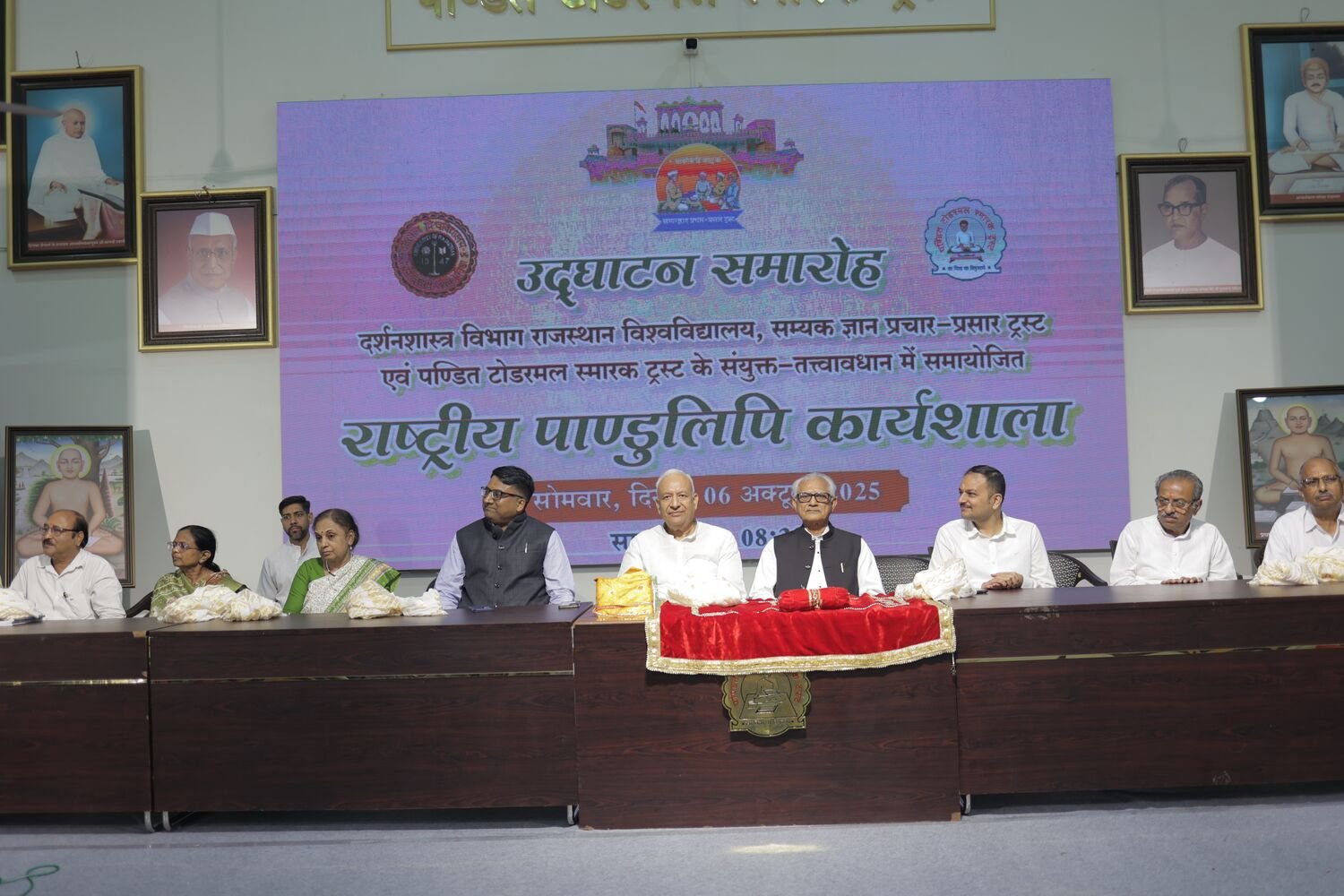
The National Pandulipi Workshop was organised in joint collaboration between the Department of Philosophy at the University of Rajasthan, the Samyak Gyan Prachar Prasar Trust, and the Pandit Todarmal Smarak Trust — a tri-institutional partnership uniting academic scholarship with traditional study.
The structure was intensive. Each day brought four sessions: morning study of a script's structure and vowels, mid-morning work on conjuncts and confusable letters, an afternoon session on reading, and an evening practice block. A short daily quiz followed the third session every day, ensuring concepts were absorbed before the next day began.
Two scripts were taught in depth. The first half of the workshop, led by Dr. Preeti Pancholi, took participants through ancient Devanagari — its history, vowels and consonants, the conjuncts that confuse beginners, and the regional words that appear in handwritten manuscripts. The second half, led by Dr. Dharmendra Bhatt, did the same for the Grantha script — essential for reading South Indian Jain manuscripts in their original form.
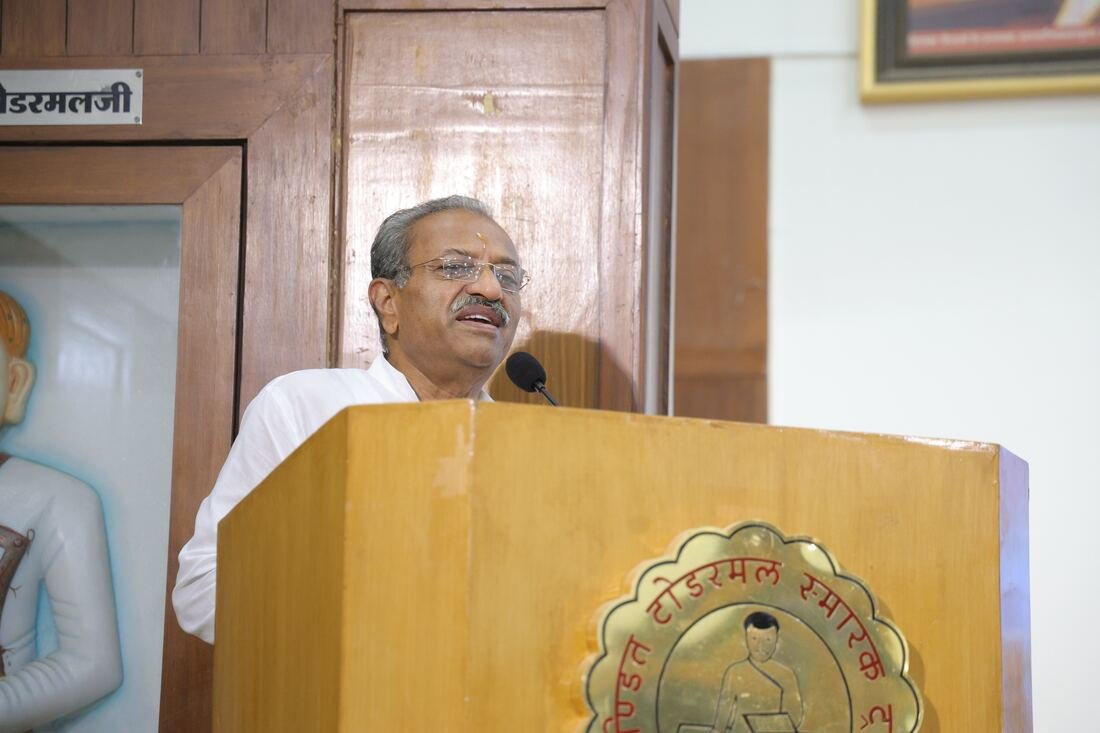
Around these two main strands, three further scholars contributed: Dr. Som Babu Sharma on manuscript conservation, Prof. Shriyansh Singhai on manuscript editing, and the workshop's convener and director Shastri Swanubhav Jain on the practical study habits and methodology that this kind of work demands.
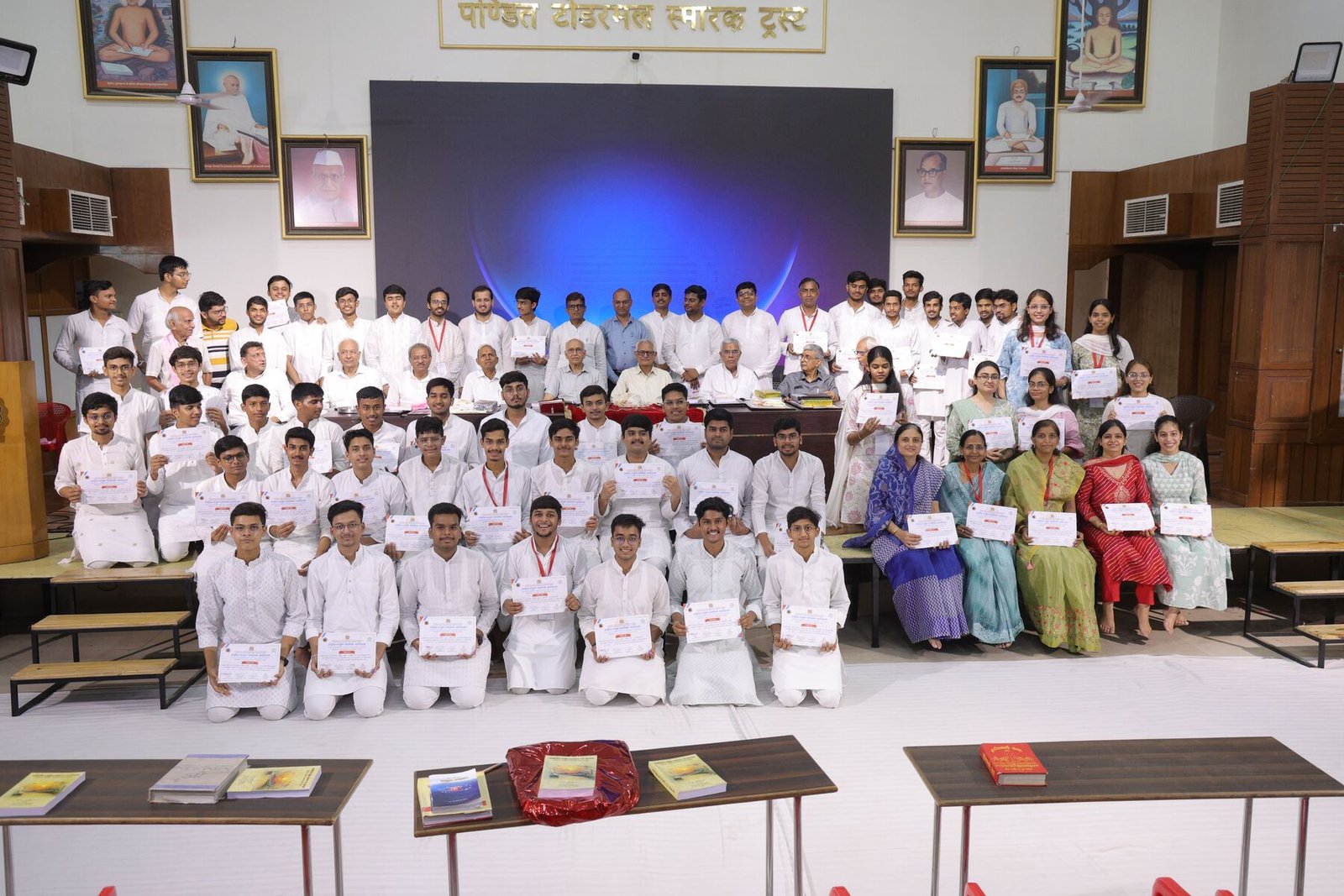
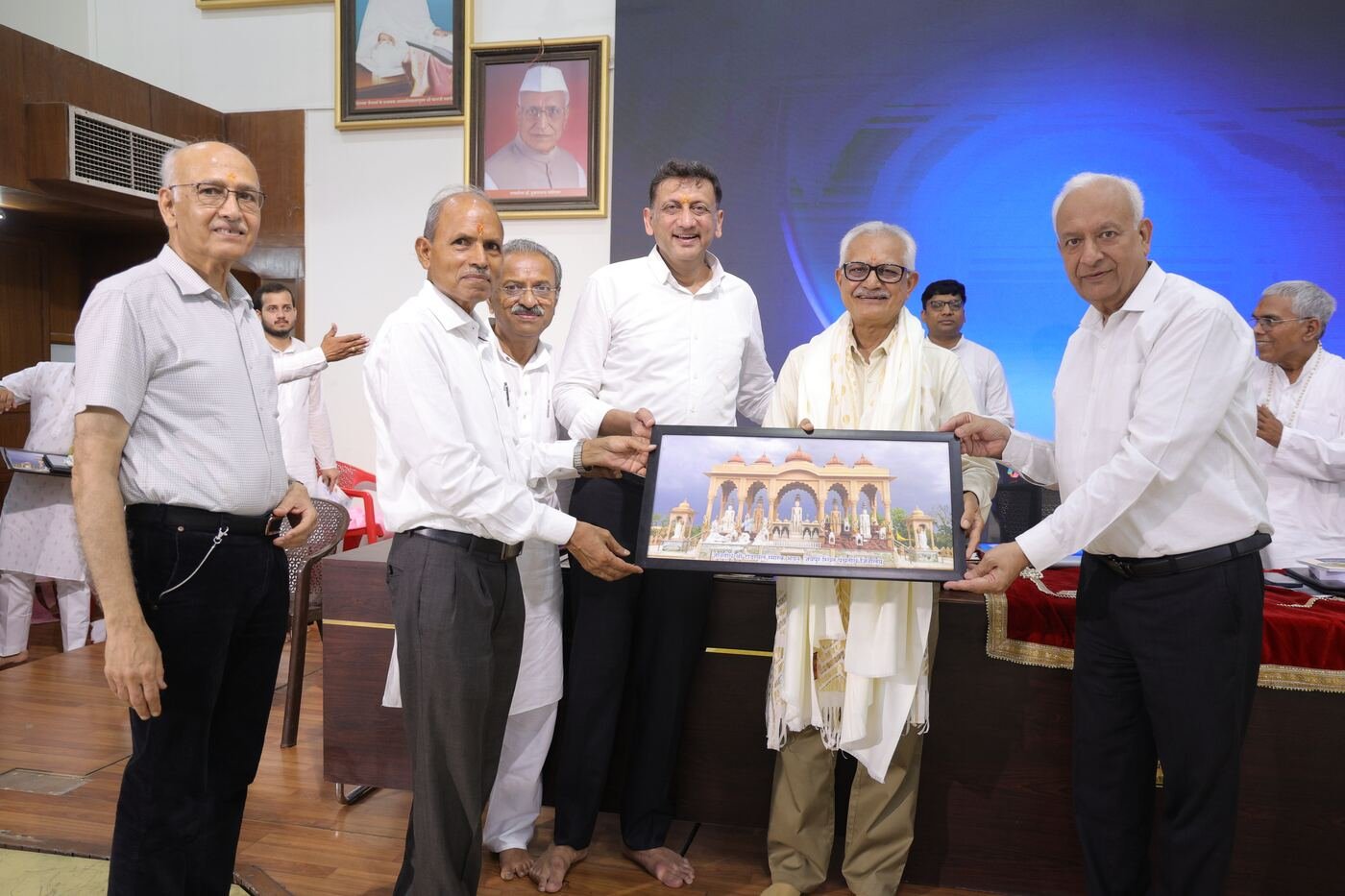
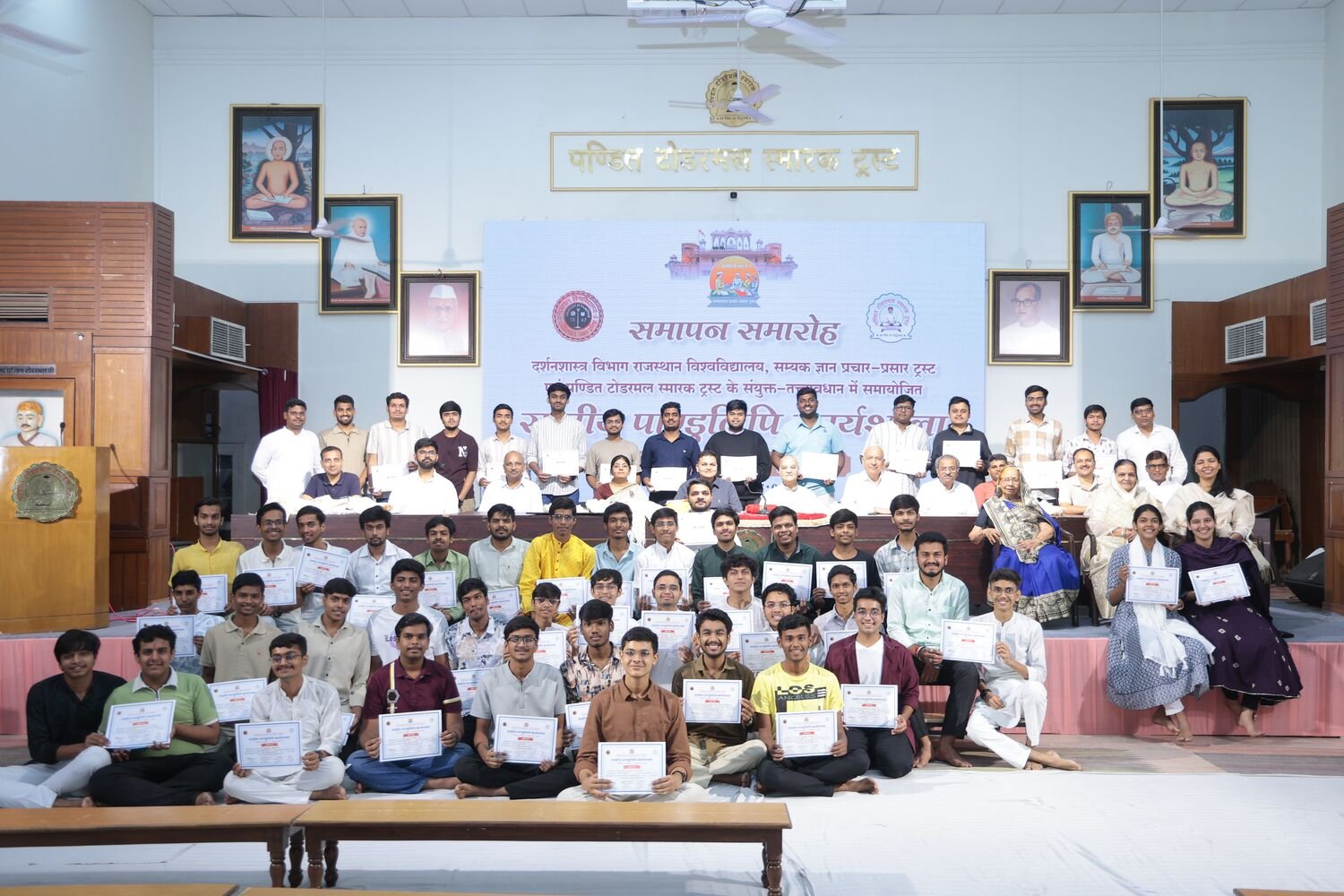
The workshop closed on 13 October with a final examination in the morning and a closing ceremony in the evening — distinguished guests included Dr. Bela Kothari, Director of the Jain Studies Centre at the University of Rajasthan, and Dr. Shakuntala Jain, Director of the Apabhramsha Academy in Jaipur, alongside several others from academia, civil service, and the trust community.
Day-by-Day Schedule
Teaching Faculty

Dr. Preeti Pancholi

Dr. Dharmendra Bhatt

Shastri Swanubhav Jain

Dr. Som Babu Sharma

Prof. Shriyansh Singhai
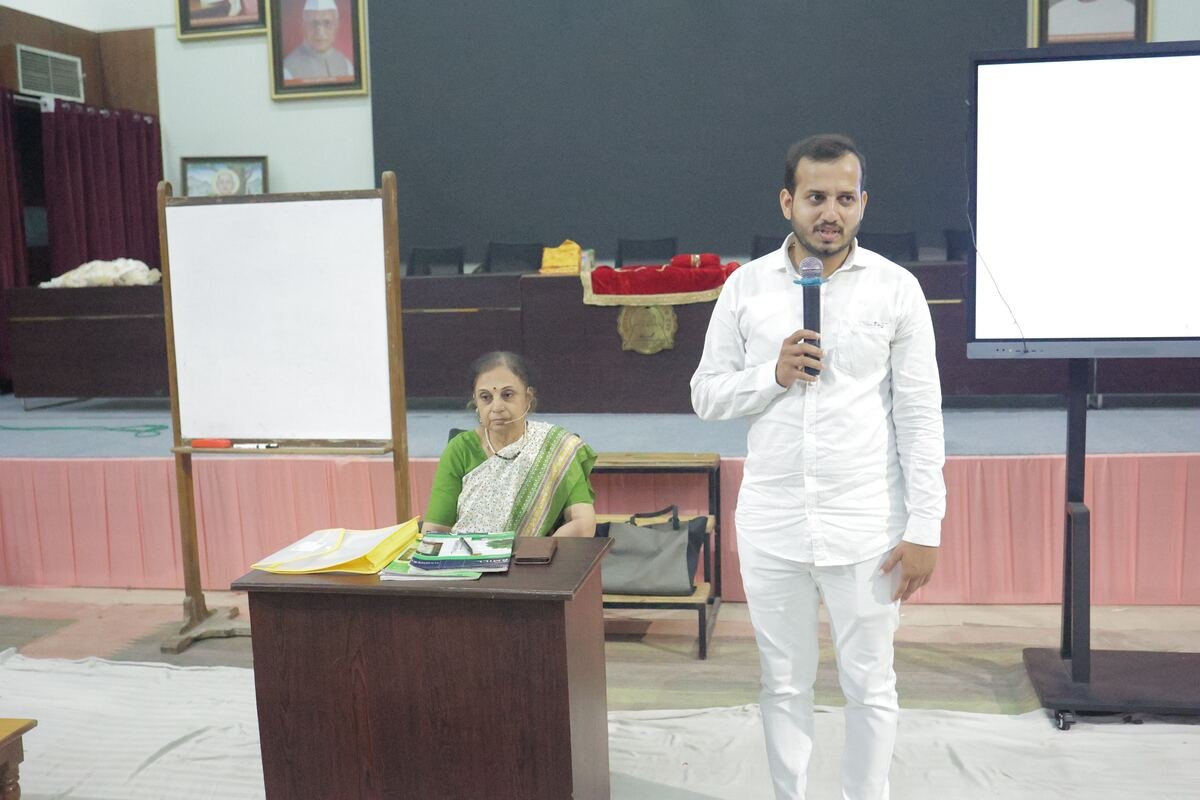
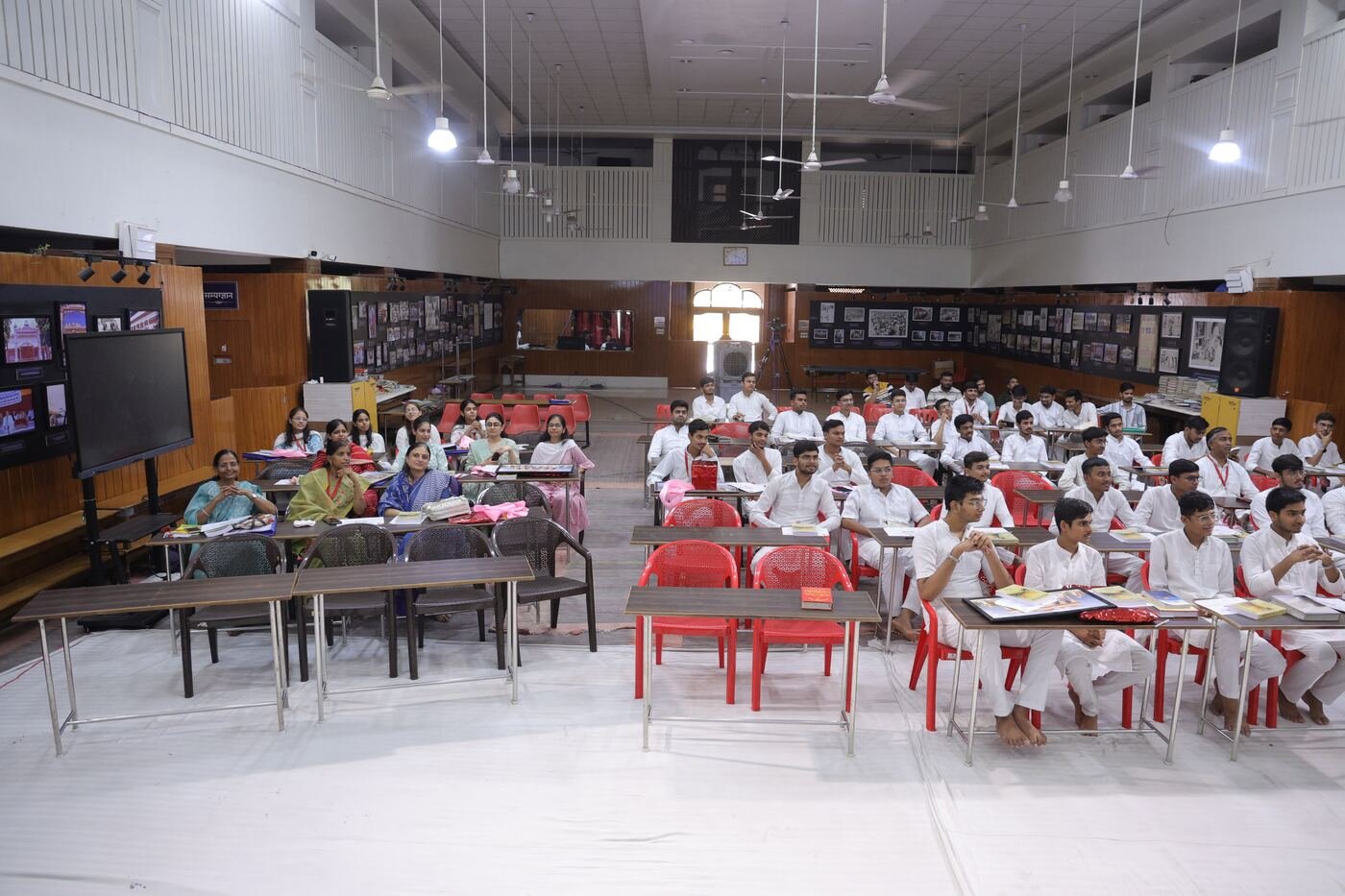
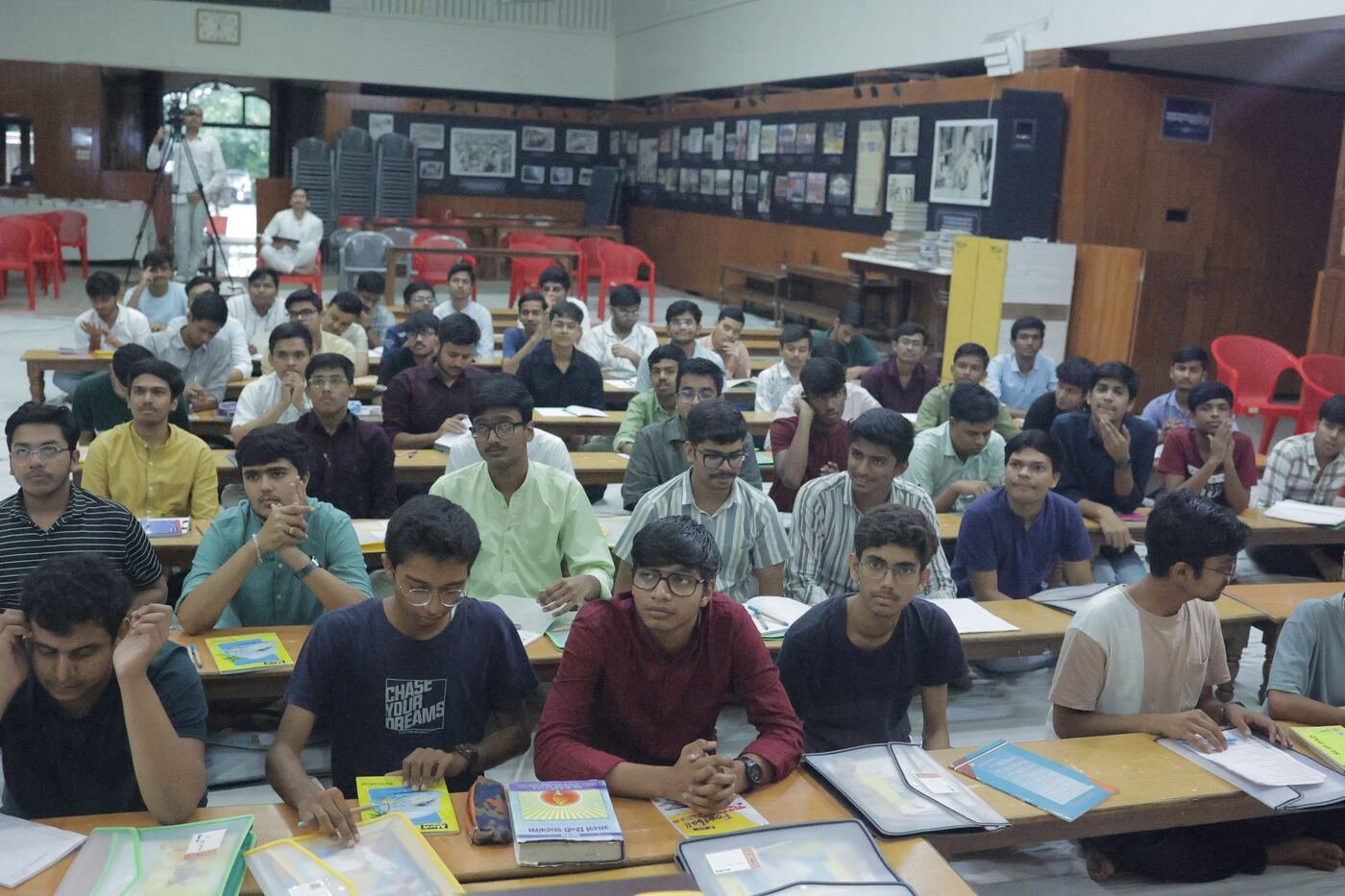
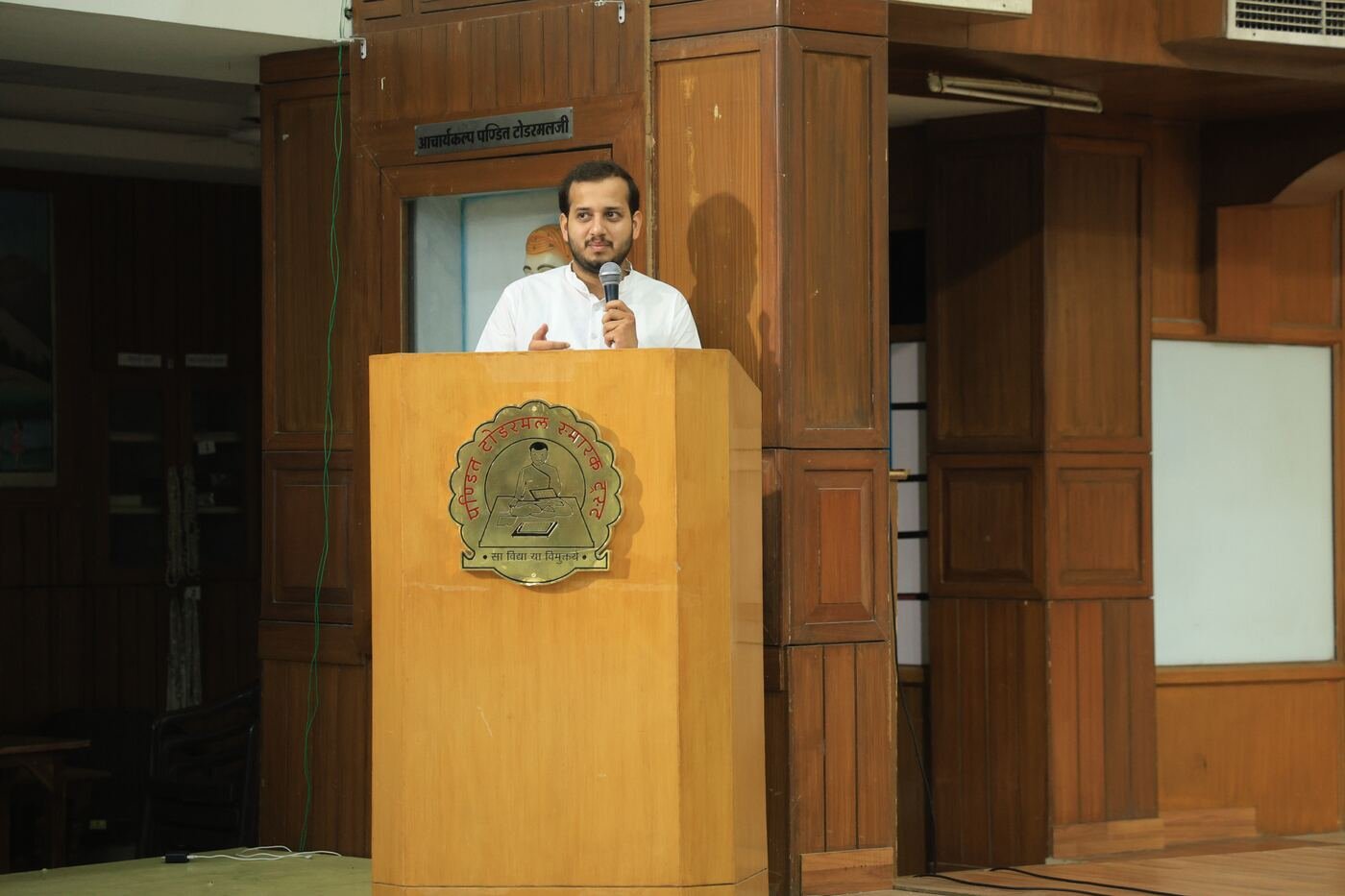
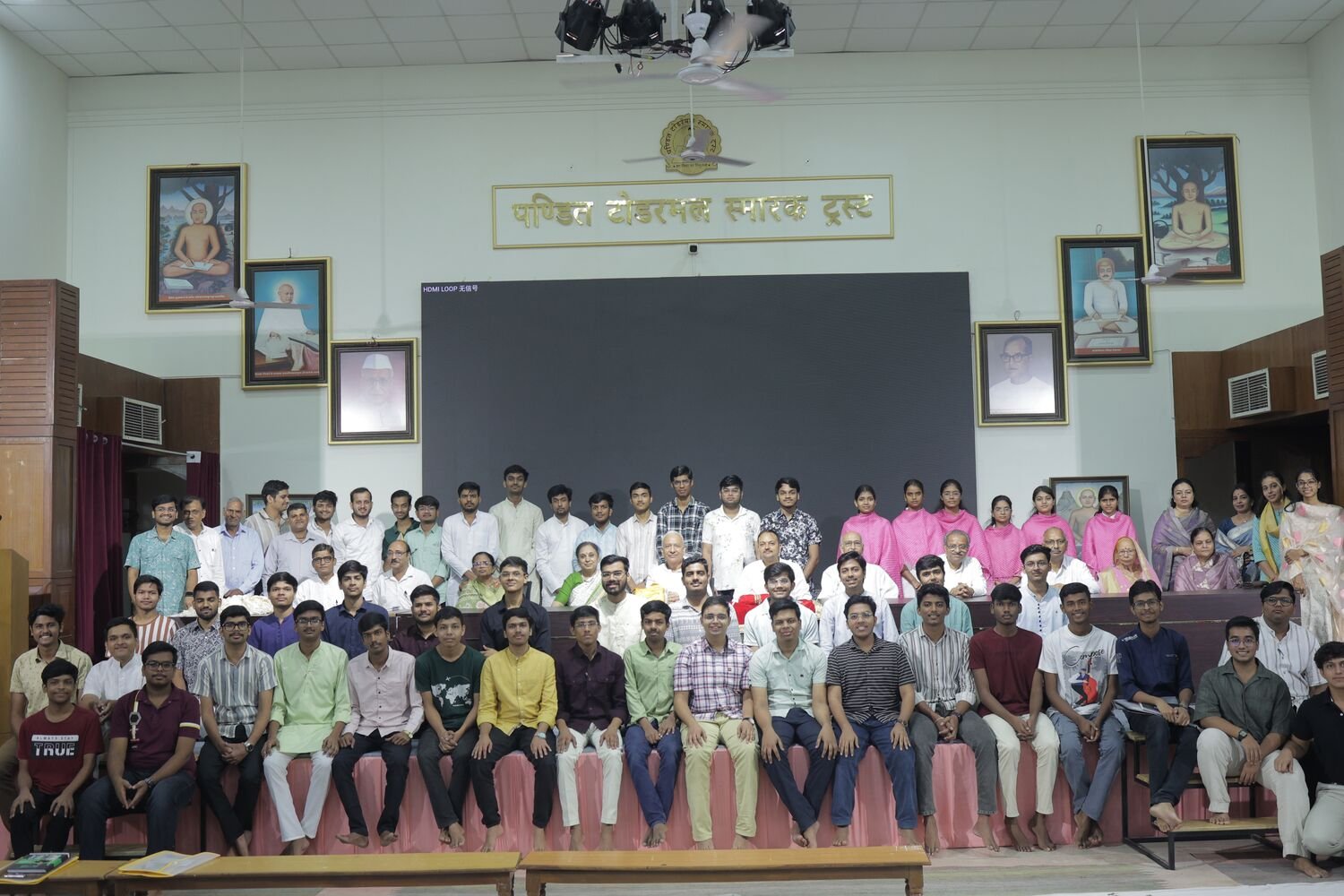
A glimpse of the workshop
Eight days in pictures
In their own words
Eight days transformed how I see manuscripts. Before this workshop, ancient Devanagari was a barrier; now I can read the very texts my teachers had only described to me. The structured progression — letters, conjuncts, regional words, and finally full pages — was unlike any course I have attended.Aakash Sharma आकाश शर्मा Research Scholar · Department of Sanskrit
The Grantha script segment was a revelation. Coming from North India, I had never been exposed to South Indian Jain manuscript traditions. Dr. Bhatt’s patient explanation of each character’s evolution opened an entire world of texts I can now access in their original form.Priya Mehta प्रिया मेहता M.A. Philosophy Student · University of Rajasthan
What I valued most was the daily quiz. It forced me to consolidate each day’s learning rather than letting concepts blur together. By Day 8 I genuinely felt prepared, not just exposed. The faculty made what could have been intimidating material feel approachable and joyful.Devansh Jain देवांश जैन Independent Scholar · Khaniyadhana
The atmosphere at the Todarmal Mahavidyalaya was perfect for this kind of immersive study. Eighty serious students, five generous scholars, and a daily rhythm that respected both intensity and rest. I left with skills, but also with a community of fellow learners.Shruti Bhatnagar श्रुति भटनागर PhD Candidate · Jain Studies Centre